

The RFEF presents La Academia, the new identity of its Training Department
President Rafael Louzán, together with the national team coaches in football, futsal, and beach soccer, took part in an event this Tuesday at the Ciudad del Fútbol in Las Rozas to unveil La Academia RFEF, the new identity of the Royal Spanish Football Federation’s Training Department, and to present the full educational program for the 2025–2026 academic year, available at academia.rfef.es.
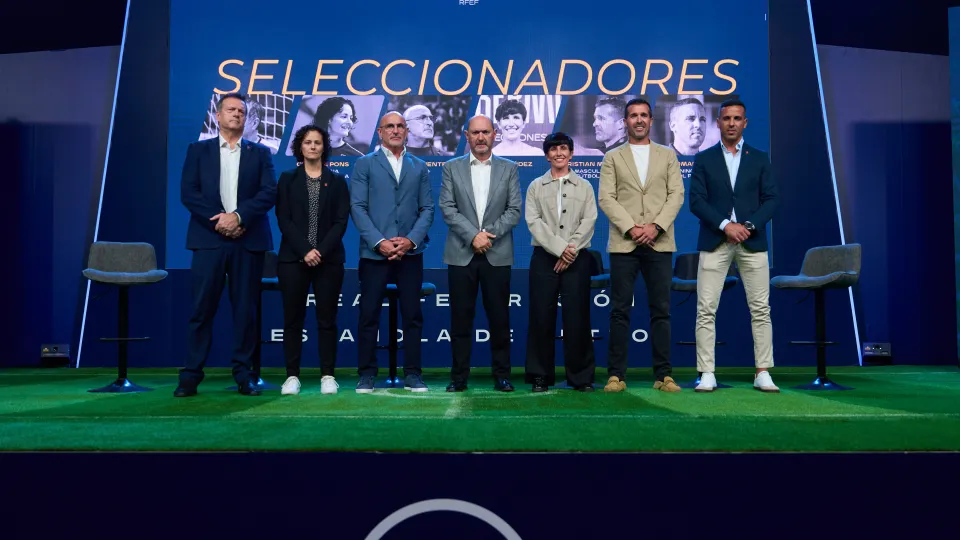
According to President Louzán, this new stage “will mark a turning point, with this true training center as the start of a new era and a new academy—not only with a physical presence here, but also with the involvement of the regional federations through their Schools and Coaches’ Committees.”
From now on, all training delivered by the RFEF will fall under the umbrella of La Academia RFEF via the digital platform academia.rfef.es, offering programs in various formats such as congresses, workshops, and seminars. The initiative also seeks to expand e-learning, promote international mobility programs, and provide a job bank to create opportunities for Spanish coaches who are not currently active.
During his remarks, President Louzán also praised the broader achievements of Spanish football: “Aitana Bonmatí has been recognized with her third consecutive Ballon d’Or, which is a source of pride. Lamine Yamal will, sooner rather than later, also become a Ballon d’Or winner. Luis Enrique was named the best coach of last season, and we must not forget Vicky López, another international who was honored as well. I also extend this recognition to FC Barcelona. All of this adds to the excellent work of Luis de la Fuente, Montse Tomé, and Sonia Bermúdez, which allows Spain today to be ranked number one in the FIFA standings for both men and women—the first time a country has achieved this double honor on the pitch.”
Iván Cancela, Director of the Coaches’ Department, acknowledged those who paved the way in training: “You guided us on this path; our task is to improve it day by day, equipping coaches with the best tools.” David Gutiérrez, Director of the National School of Coaches, added: “An investment in training without real resources is not possible. We now have a new brand, a modern identity that must represent us worldwide. We have inherited a legacy, and it is our responsibility to maintain the level. Success always stems from prior training. We train coaches, and from now on, all of the RFEF’s training activity will be brought together under this brand.”
The six national head coaches also emphasized the importance of education:
Luis de la Fuente: “Learning never ends—it is a constant process. We must dedicate time and effort, always with the mindset that education is ongoing.”
Sonia Bermúdez: “I had the privilege of training here, and I encourage more women coaches—because opportunities do come. I hope we will see many more women in this profession.”
Jesús Velasco: “We are not world champions at present, but we will try. Coaches must help players improve, and in this, Spanish coaches are a model.”
Clàudia Pons: “To train, share, learn, and stay motivated—that is essential. When you see what the RFEF offers, it is extraordinary, and it makes you want to keep learning, because we represent the Coaches’ School internationally.”
Christian Méndez: “We are pioneers and global leaders in the training of beach soccer coaches.”
Sidi Omar: “Having licensed coaches is vital—it is what enables us to improve every day.”
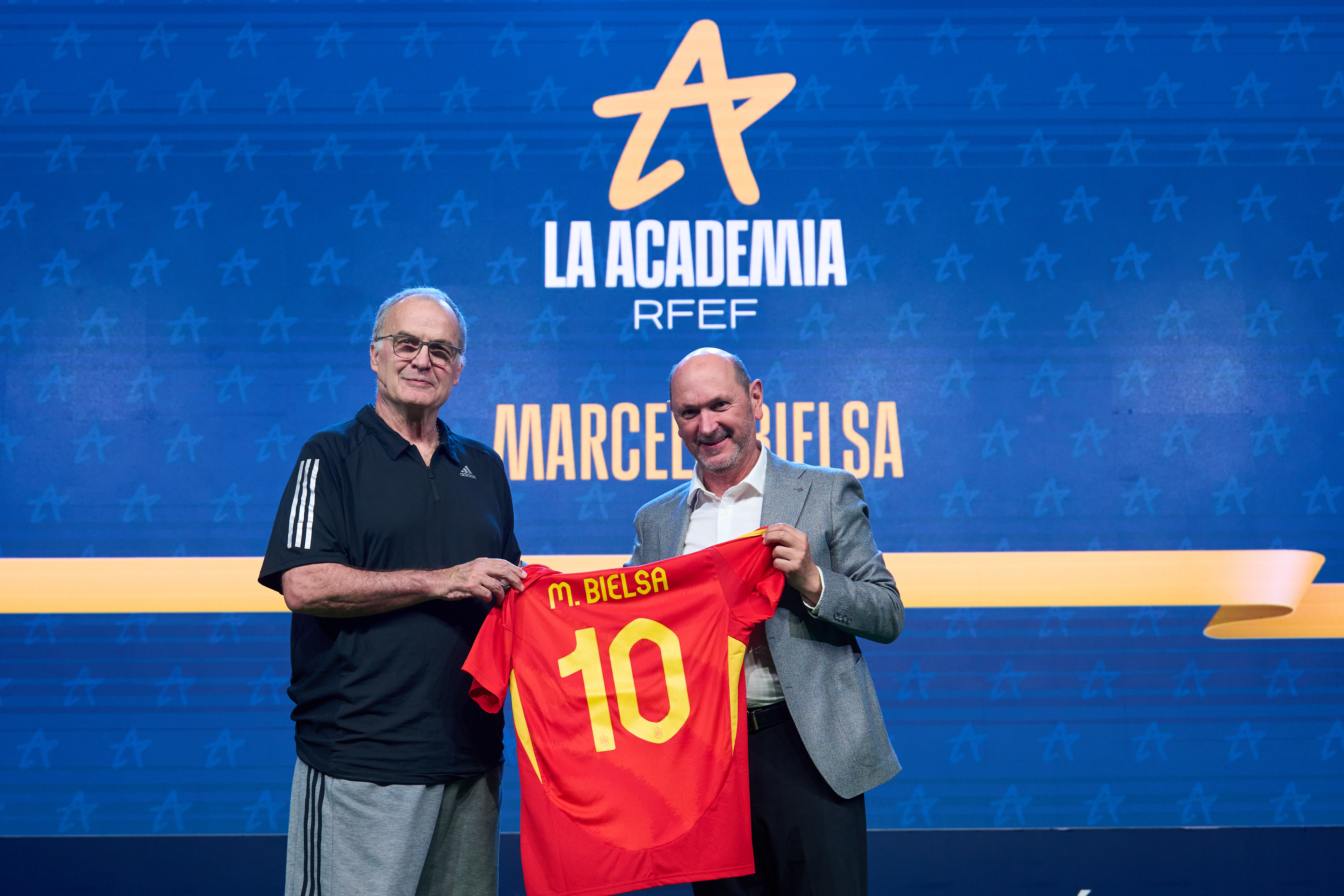
The event concluded with a special highlight: a lecture by Marcelo Bielsa, current head coach of Uruguay, who received a commemorative gift from President Louzán before addressing the audience.
More related news
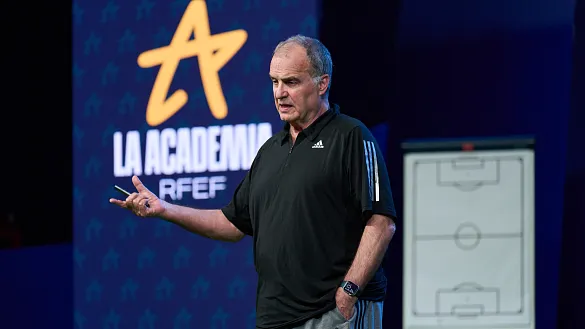
El técnico argentino realizó una ponencia en la presentación de la nueva identidad del Área de Formación de la RFEF